A Field Guide to Block-Print Geometry
Ajrakh, ikat and bandhani: three Indian textile traditions, three ways of turning a simple rule into an endless surface.
Every Indian textile tradition is, at heart, an algorithm. A carver cuts one block; a dyer ties one knot; a weaver resists one bundle of threads. Then the rule repeats — hundreds of times, thousands — until a single gesture becomes a surface you can wrap a body in.
This is a short field guide to three of those rules.
Ajrakh: the grid that breathes
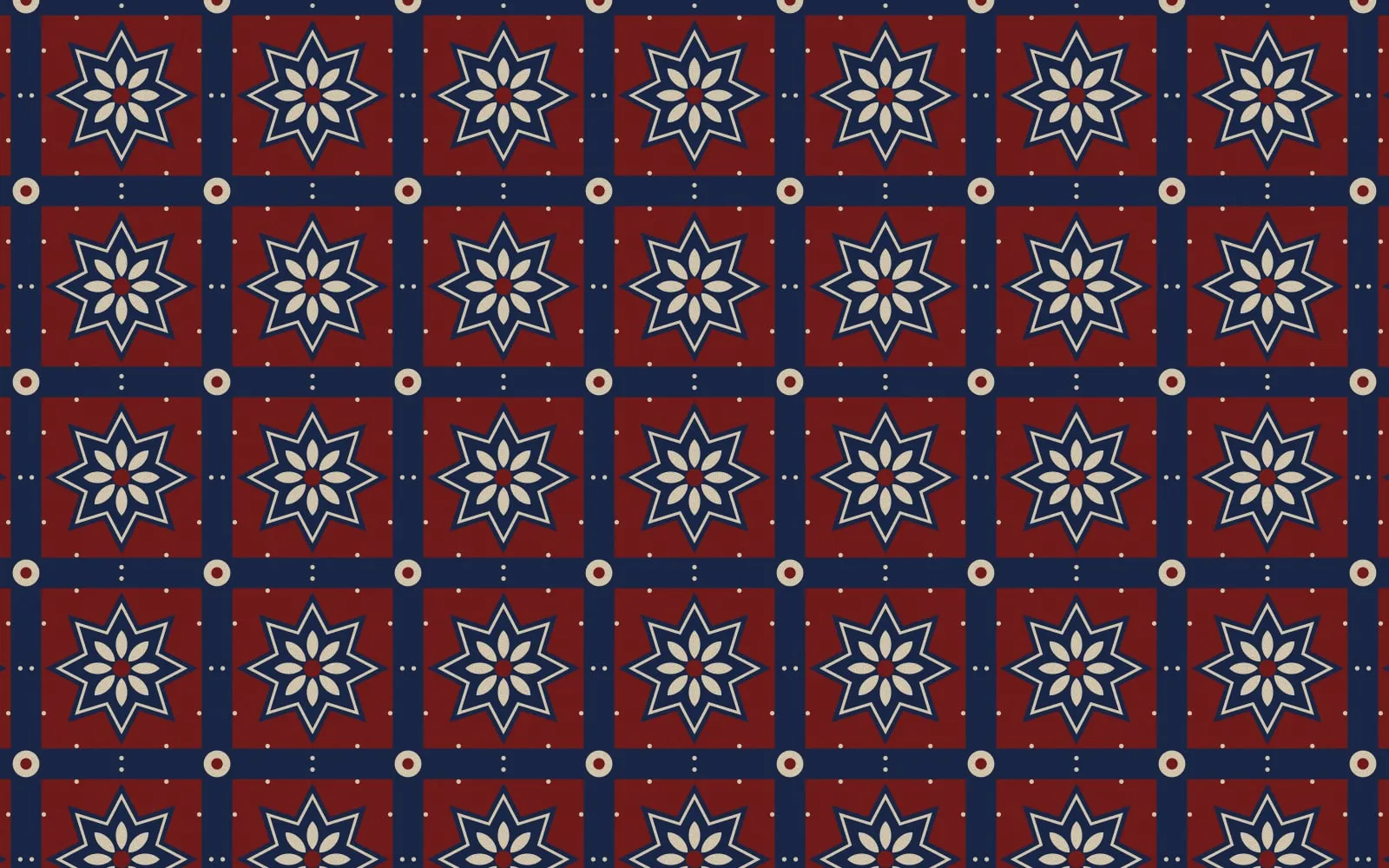
Ajrakh is a resist-printed cloth from the deserts of Sindh and Kutch, traditionally coloured with indigo and madder. Its signature is the star-in-a-square: a strict grid that somehow never feels rigid, because every cell contains a flower trying to escape it.
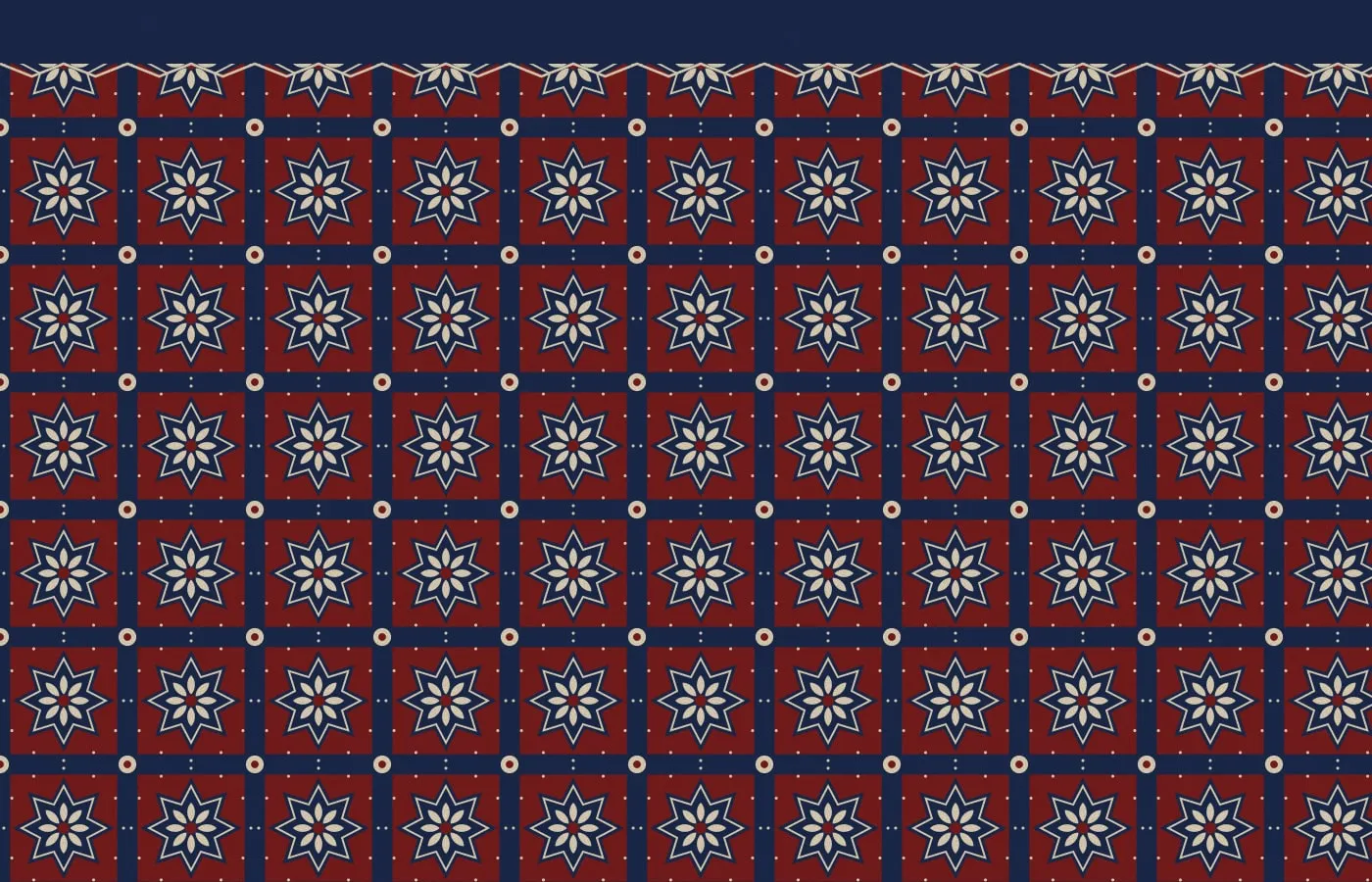
Ajrakh-style repeat. Illustration drawn in code for this sample post.
Look closely and you’ll see the logic: a primary motif at the centre, a secondary motif at every corner, a border of dots to stitch them together. Three layers, one rule.
Ikat: blur as a feature
Ikat flips the order of operations. Instead of printing on finished cloth, the threads themselves are tied and dyed before weaving. When the loom brings them together, the edges never quite align — and that soft, feathered blur becomes the whole point.
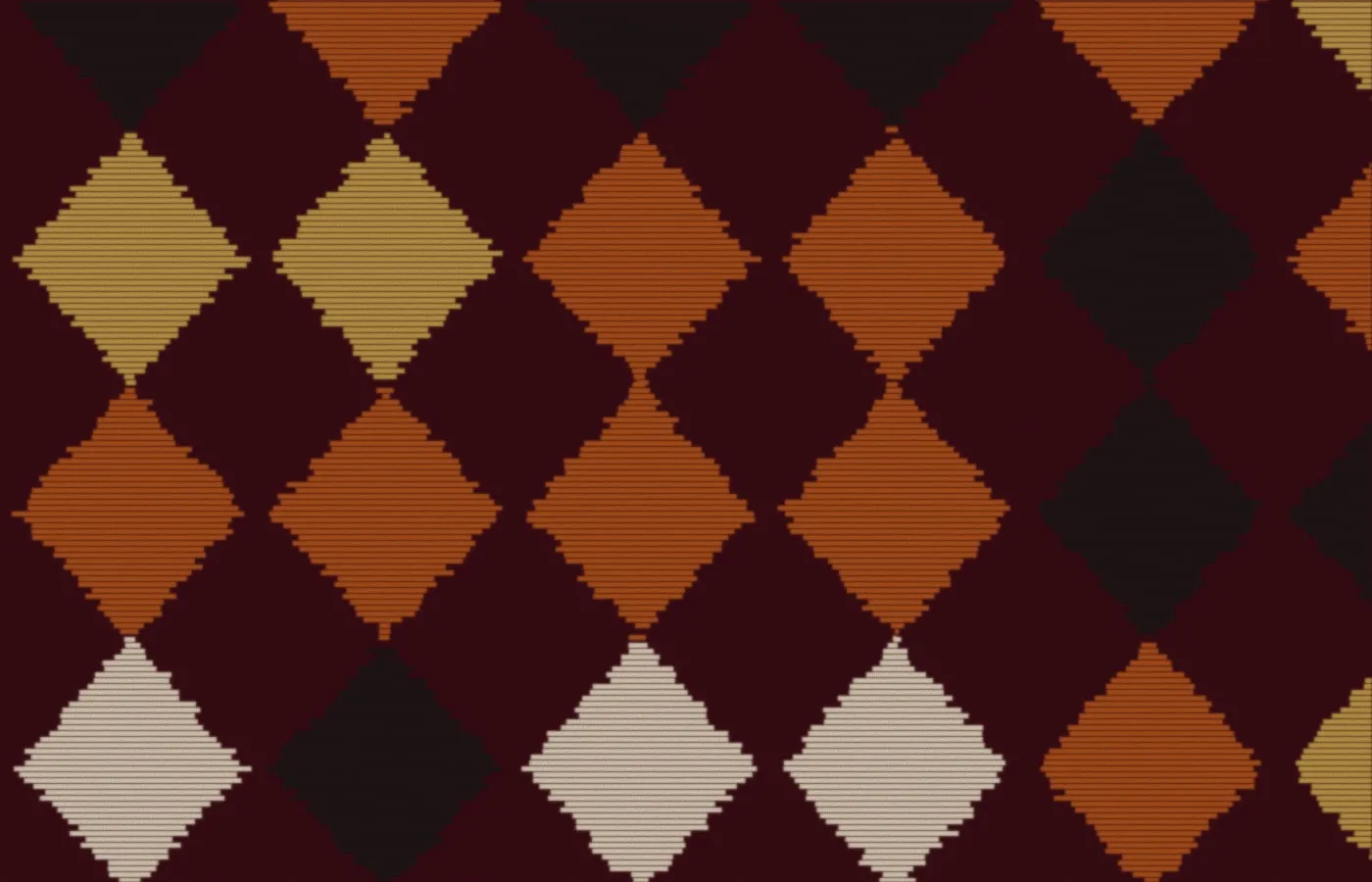
Ikat-style diamonds: the jagged edges come from threads that land a few millimetres off. Illustration drawn in code.
There’s something quietly radical about a craft that refuses perfect registration. Precision would be easy; the makers chose imprecision on purpose.
Bandhani: a pattern of points
Bandhani, from Gujarat and Rajasthan, works with the smallest unit possible: a dot. Thousands of tiny knots are tied into cloth before dyeing, and each one leaves a pale ring when untied. Arrange enough rings and you get diamonds, waves, even elephants.

Bandhani-style dot diamonds. Illustration drawn in code.
A bandhani sari is a pointillist painting made by hand, one knot at a time.
What the rules teach
Put the three side by side and a pattern of patterns appears. Ajrakh is about structure, ikat about tolerance, bandhani about accumulation. Between them they cover most of what a designer — or a programmer — needs to know about making something large out of something small.
This is a sample post showing how images work. Replace it with your own, and drop real photographs into src/assets/blog/.