Maximalism Is a Worldview
Notes on Indian colour, pattern and noise — and why "more is more" is a philosophy, not a decorating mistake.
Walk into any Indian wedding and minimalism files for asylum. Marigolds in ropes. Rani pink against parrot green. Mirror-work catching every light, a brass band competing with a playlist, and an aunt competing with both.
Western design culture spent decades teaching us that this is too much. White space signals taste; restraint signals intelligence. But maximalism isn’t the absence of a philosophy. It is one.
Pattern as a language
Block prints, kolam, jaali screens, paisley — Indian ornament is overwhelmingly geometric and generative. A small rule, repeated with variation, produces enormous complexity. Mathematicians would recognise it; programmers would call it a loop.
A rangoli is an algorithm drawn in rice flour, executed fresh every morning.
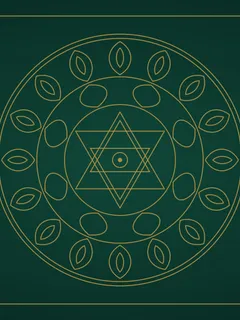
That’s also why every ornament on this site is drawn in code rather than imported as an image. The mandala on the home page is a handful of functions — petals, scallops, spokes — repeated around a circle.
Colour as courage
Indian palettes are often described as “vibrant,” which is a polite way of saying unafraid. Saffron next to magenta shouldn’t work. It does, because the culture that produced it never asked permission from a colour wheel.
Noise as democracy
Maximalism also has a politics. Minimal spaces are easy to control; everything has its place, decided by someone. A bazaar is different: thousands of independent decisions, layered on top of each other, producing a whole no one designed. That’s messy. It’s also alive.
I don’t think minimalism is wrong. I think it’s one dialect. This journal is written in another one.
This is a sample essay — replace it with your own.